Six Cottages Where the Words Come Quietly: Planning a Winter Writing Week by the Sea
Photo: Not specified in the source, Public domain, via Wikimedia Commons
There is a particular kind of hope that arrives with a winter cottage booking made in the name of writing. You picture yourself at a scrubbed table, a mug going cold, gulls doing whatever gulls do, and four thousand words falling out of you by Thursday. Sometimes it happens. More often, you spend the first two days rearranging furniture and the third discovering that the only chair is a wicker affair designed by someone who hated spines.
A writing break isn't really a holiday with a laptop in it. It's a small piece of infrastructure. Get the desk, the light, the quiet and the escape route right, and the week does most of the work itself. Get them wrong and you'll be driving home on Friday telling everyone it was lovely, actually, while quietly mourning the three chapters that never appeared.
So here's a syllabus of sorts — what to interrogate before you book, and six coastal corners of the UK where the conditions tend to come good between November and March.
The desk test (and the chair behind it)
Listings photograph the sofa, the view and the woodburner. They rarely photograph the workspace, and when they do it's usually a nesting table in a corner with a hard-backed dining chair pushed under it.
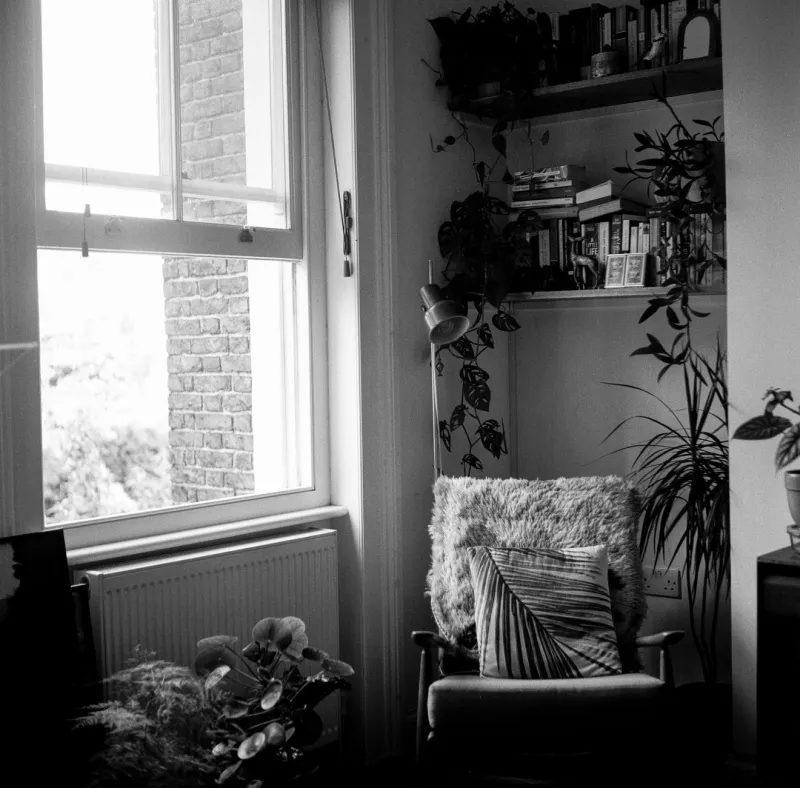
Look for honest words: 'desk', 'office', 'study', 'writing table'. Look harder for the chair. Ask, plainly, whether the chair is upholstered and whether the table faces a window rather than a wall. Owners are usually delighted to answer this; nobody has ever asked them before.
One more thing worth checking: the height of the table against the height of you. A breakfast bar is not a desk. A dresser top with a stool is not a desk. If the listing only offers a kitchen table, that's fine — most of us write at kitchen tables at home — but factor in whether it's near a radiator and whether there's a plug socket within reach of a charging cable.
Light that outlasts lunch
Between November and February, the useful daylight is short and it starts to feel borrowed by mid-afternoon. This is where coastal cottages can quietly win: fewer trees, more sky, and in many cases a north-facing window that gives you flat, honest light with no glare bouncing off the screen.
Ask which way the workspace faces. A south-facing desk sounds lovely and turns into a sun-dazzled migraine by two o'clock in March. A north or east window is duller but kinder. And check whether there's a decent lamp for the four o'clock finish — the sort of hour when a single overhead bulb makes everything feel like a waiting room.
If you like writing early, favour the east. If you're a night owl, none of this matters much and you should prioritise the lamp and the blackout curtain instead.
Silence, honestly measured
Every listing promises 'peace and quiet'. Some mean it. Others mean 'the A-road is only audible with the windows open'. Read the reviews for words like 'tranquil', yes, but also for 'road noise', 'church bells', 'the pub garden', 'scaffolding'.
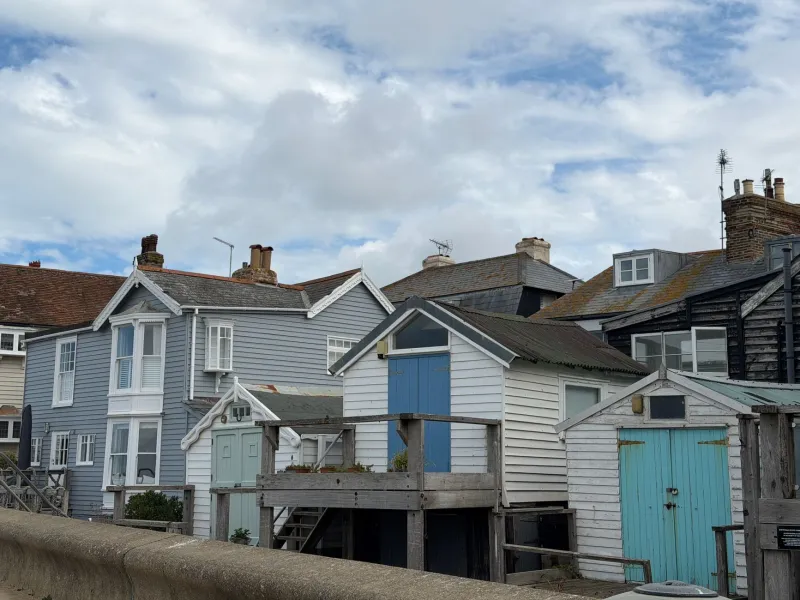
Coastal quiet has its own character. You'll be swapping traffic for tides and gulls — which is a fair trade for most people, but gulls at five in the morning in a fishing village are not a nothing. If you're sensitive to sound, ask for a cottage set back from the harbour wall, and pack earplugs as insurance rather than as an admission of failure.
The Wi-Fi question, asked properly
Remote writing weeks need two contradictory things: enough connectivity to check a fact or send a file, and not so much that you spend Tuesday afternoon watching property videos of houses you'll never afford.
Ask what the broadband speed actually is, and whether the cottage is on fibre or on a rural connection that politely gives up in the rain. Some owners now publish a speed screenshot — that's a good sign. If you need to upload large files, ask whether there's somewhere you can tether reliably; village halls and libraries often have better connections than a stone-walled sitting room with a foot of flint between you and the router.
Equally worth asking: whether mobile signal is patchy. Many people book a coastal cottage precisely because it is.
Six winter bases, six different briefs
North Norfolk, behind the salt marsh. Flint walls, reed beds, and skies that go on longer than seems reasonable. Blakeney, Thornham and the lanes around them offer that rare combination of total flatness for the after-lunch walk and enough birdlife to keep you at the window when the sentence won't come. Best for: people who think better while walking in a straight line.
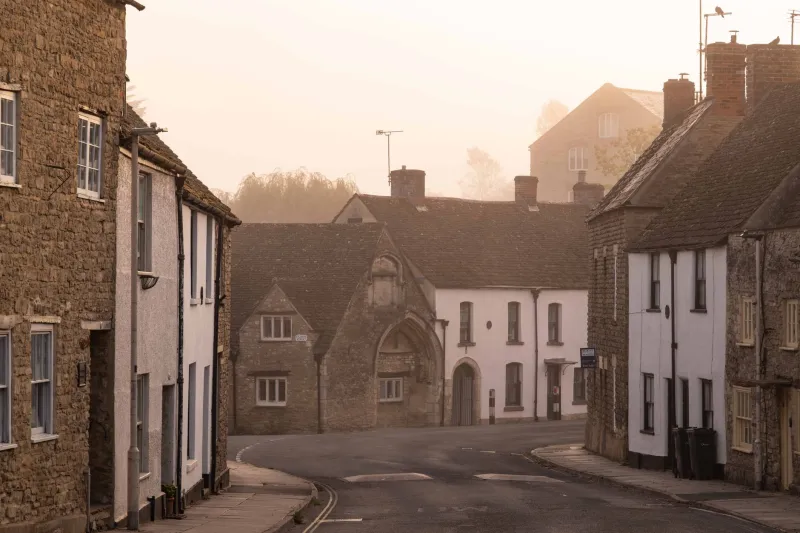
The Suffolk edge, where the marsh meets the shingle. Southwold and the villages behind it are quiet in the way that only out-of-season seaside towns are — shops open, nobody about. Good for a first writing week, because you can break the day with a proper coffee and a paper rather than a bleak and beautiful trudge.
Northumberland, a mile or two inland from the dunes. Bigger weather, fewer people, and cottages attached to farms with a converted byre doing service as a studio. Best for anyone who needs the outside to feel bigger than the inside for a week.
Pembrokeshire, on the sheltered side. Coastal path within reach, but a valley rather than a cliff at the door. Winter here is wetter and milder than East Anglia, which suits writers who'd rather walk in drizzle than in a north-easterly.
The Solway, on the Scottish side. Vast tidal flats, extraordinary light, and village shops that close for the winter — check your provisions before you arrive. Best for a genuinely uninterrupted week.
The Kent and Essex marshes. Closest to London, and consequently the easiest to reach by train with a manuscript and a bag of jumpers. Whitstable, Faversham and the villages around the Dengie offer mudflats, oysters and a decent pub within a walk.
Small rituals that hold the week together
A writing retreat doesn't need a schedule, but it does need a shape. The writers I know who actually finish things tend to build the week around three fixed points rather than a word count.
Morning: out of the door before the kettle's second boil. Ten minutes is enough. Coastal weather in winter gives you a completely different brain to the one you carried downstairs.
Midday: a proper stop. Soup, a walk, a chapter of somebody else's book. The temptation to push through is strong and almost always a mistake.
Late afternoon: the four o'clock finish. The light's gone, the words are thinning, and a second cup of tea in a cold garden is better than a bad paragraph.
And one practical ritual worth naming: write the first day off. Arrive, unpack, walk to the sea, eat something unremarkable, go to bed early. Start properly on the Saturday with a clear head and the shops already found. It's the same advice as an arrival day done gently, applied to a different kind of luggage.
What to pack, briefly
An extension lead. A second jumper. A cushion for the chair that looked fine in the photos. A notebook for the walk, because the good line always arrives at the far end of the beach rather than at the desk. And a paperback you've already read, for the evenings when reading something new feels like work.
Book the cottage for the desk first, the silence second and the view third, and you'll get more out of a damp Tuesday in February than most people manage in a week of high summer.