The Water Clock Knows Best: A Cottage Break Planned Around the Tides
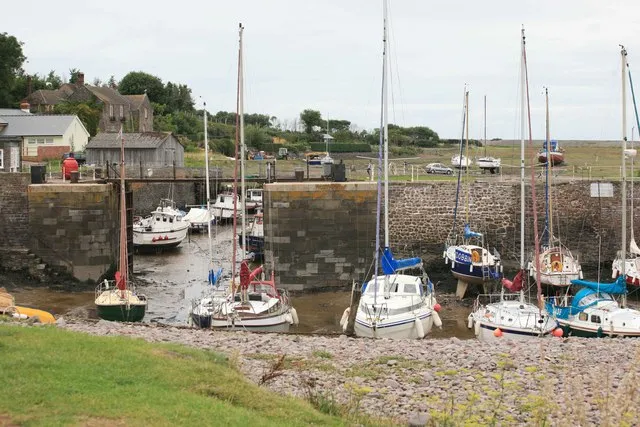
Photo: roger geach, CC BY-SA 2.0, via Wikimedia Commons
Most cottage holidays are planned by clock time. Breakfast at nine, beach at eleven, pub at six. On the coast, that plan can come unstuck very quickly. The sea keeps its own schedule, and it is not especially interested in yours. A beach that looks enormous at breakfast can be a thin strip of shingle by lunch. A path that seems perfectly ordinary can lead to a causeway with water already licking the stones.
At Sea Dreams Cottage, we like a slow break as much as anyone. But slow does not mean disorganised. Planning around the tide is one of the simplest ways to make a seaside cottage holiday feel calmer, safer and altogether more local. You stop fighting the water and start working with it.
Why the Sea Keeps Different Hours
Tides are driven by the moon and sun, not by the holiday brochure. Most UK coastlines get two high waters and two low waters in roughly 24 hours and 50 minutes. That extra 50 minutes matters. High tide tomorrow will not arrive at the same time as today, and by the end of a week the pattern has shifted by several hours.
This is why a cottage break can feel oddly rhythmic after a few days. You begin to notice the water creeping up the slipway, the gulls moving to a different patch of sand, the harbour boats swinging round. It is a useful sort of clock: one that tells you when to go rockpooling, when to walk the estuary path, and when to settle in with a book while the sea does its thing.
How to Read a Tide Table Without Overthinking It
You do not need to become a tidal scientist. You need to know the nearest standard port, the day's high and low water times, and roughly how much water is moving. Tide tables are published by the harbour authority, the RNLI and several reliable apps. The paper notices pinned up in harbour offices and village shops are often just as good, and they have the advantage of being local.
A few practical points are worth knowing. Times are usually given in GMT or BST, so check which one applies. Spring tides are the big ones, and neap tides are the smaller ones; neither has anything to do with the season. Wind and low pressure can push water higher than the table suggests, and storms can change everything. A tide table is a guide, not a guarantee.
If you are heading somewhere with a causeway, a ford or a famously fast tide, take local advice seriously. Morecambe Bay, the Solway Firth and the causeway to Holy Island are not places to test your interpretation skills. Guided walks and official safe-crossing times exist for good reason. Build those into the day rather than treating them as an inconvenience.
Coastlines Where the Water Calls the Shots
Some UK coastlines make the tide part of the day's drama. Morecambe Bay is the obvious example: vast sands, shifting channels and guided walks that teach you why the water arrives faster than you expect. The Holy Island causeway in Northumberland is another; the safe crossing window shapes everything from breakfast to the last pot of tea.
In Cornwall and North Devon, small coves can almost vanish at high water and then reveal rockpools, caves and wide sand at low. The north Norfolk coast is a different pleasure altogether: at low tide the beach seems to stretch to the horizon, while high water brings the sea close enough for a very short stroll from the cottage door. Pembrokeshire has coves and estuaries where the tide turns a walk into a proper outing, and parts of the Isle of Wight reward anyone who checks the water before setting off.
You do not need a famous location, though. A humble harbour village with a slipway and a bit of mudflat can be just as absorbing if you know when to look.
A Gentle Cottage Itinerary That Works With the Water
Start with the tide table, then build a loose day around it. If low water falls in the morning, make that your rockpooling or beachcombing slot. Take a bucket, old trainers and a towel, and leave the good shoes at the cottage. If high water arrives around lunch, use it for a harbour walk, a pub lunch or a potter round the village while the sea fills the view.
A good cottage day might look like this: low-tide breakfast, a slow hour on the rocks, back for coffee and a shower, then a high-tide walk along the promenade or a browse in the local bookshop. In the afternoon, as the water drops again, head out for a longer beach walk or a path that only makes sense at mid-tide. Finish with supper at the cottage and a final look at the harbour as the light goes.
Keep one day deliberately loose. Tide times shift, weather changes, and the best seaside moments are often the ones you did not timetable.
What to Ask Before You Book
Ask the cottage owner about the nearest safe beach path, any tidal roads or causeways, and whether the local harbour posts tide times. Check whether the beach is sand or mud at low water, and whether swimming is sensible at all. A tide app that works offline is useful, but a conversation with someone who lives there is better.
Pack wellies, a torch, a warm layer and a healthy respect for slippery seaweed. And remember that the sea is not an attraction with opening hours. It is the reason the whole place exists. Plan around it, and the break will feel less like a schedule and more like a rhythm.